Endometriosis Center
Prof. Dr. med. Hermann Hertel

(Acting with competence
The Endometriosis Center at Hannover Medical School (MHH) cares for and treats patients with endometriosis in accordance with the standards of a certified endometriosis center.
The AWMF guideline Endometriosis: Diagnosis and Therapy published by the German Society for Gynecology and Obstetrics (DGGG) is decisive for the quality of treatment of affected women in the Endometriosis Center of our Women's Clinic.
We are certified by the Endometriosis Research Foundation (SEF) in accordance with the standards of a level III endometriosis center (clinical-scientific center).
Thecentral point of contact for all patients with endometriosis is the endometriosis consultation.
- A referral from a gynecologist is required for this.
Contents
- Appointments - where should I call?
- Living with endometriosis
- What happens in the endometriosis consultation?
- This might interest you
- Support services
What happens in the endometriosis consultation?
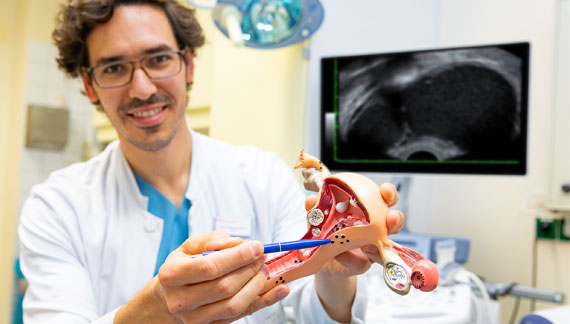
A detailed medical history is always taken and a general and gynecological examination including sonography is performed. If necessary, other specialist disciplines (urology, surgery, gynecological psychosomatics, pain therapy, balneotherapy/rehabilitation medicine) are involved. Laboratory analyses are also carried out if necessary. A conservative, i.e. drug therapy and/or physical measures or surgical therapy strategy is then determined together with the patient and/or further diagnostic steps are agreed.
In the case of an existing desire to have children , we focus on organ-preserving therapies.
In the event of any bowel, bladder or ureter involvement, we work on an interdisciplinary basis with the surgeons or urologists at the clinic.
As part of an operation, we offer you a gentle, minimally invasive procedure in the form of a laparoscopy, which is gentle on the nerves so that bladder, bowel and sexual function is preserved even after the operation. For this purpose, we have the option of performing robot-assisted laparoscopies using 3D technology. In the case of extensive findings, however, an abdominal incision is sometimes necessary; this will be discussed in detail with the patient concerned before the procedure.
It is important to us to provide our patients with comprehensive information and advice in a relaxed atmosphere. To this end, we offer the women concerned sufficient space and time for appropriate care.
If necessary, as part of the interdisciplinary treatment of endometriosis, we will refer patients to other areas such as pain therapy, rehabilitation, TCM - Traditional Chinese Medicine, psychosomatics, urology or surgery.

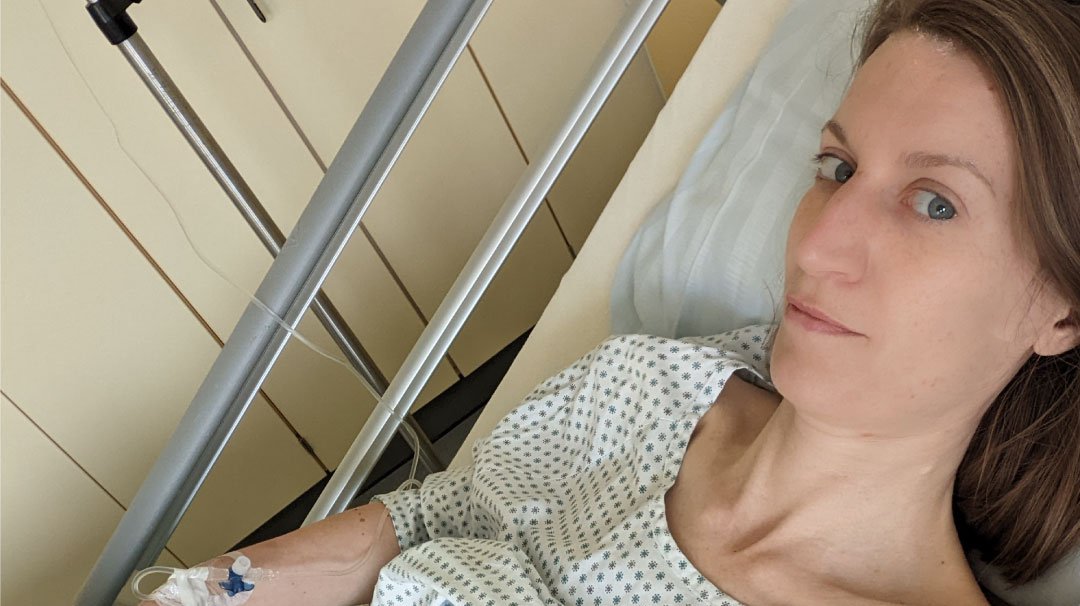
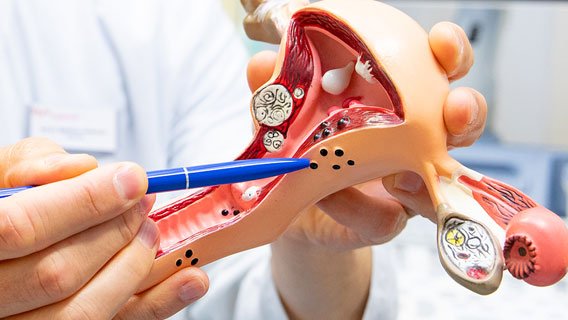
The cause could be endometriosis. Every month, many women suffer from endometriosis, which can have a considerable impact on their performance and ability to work, as well as their quality of life. One of the most common gynecological diseases - endometriosis - may be behind the symptoms. The disease affects women of childbearing age and is hormone-dependent. An estimated 1.2 to 1.5 million women suffer from endometriosis, i.e. 10 to 15 percent of women between the ages of 15 and 50 in Germany. Despite intensive research, the causes are still unknown. "Severe pain before and during menstruation, during sexual intercourse, but also during urination and bowel movements or an unfulfilled desire to have children can be an indication of endometriosis and should always be clarified by a gynaecologist," says Prof. Dr. Peter Hillemanns, Director of the Women's Clinic at the MHH.
- extreme menstrual cramps
- chronic pain during intercourse
- pain during sexual intercourse
- infertility
- fatigue
- digestive problems
Endometriosis is considered an oestrogen-dependent disease. "Scattered" endometrial tissue builds up and breaks down in the cycle, just like in the uterus itself. Bleeding and chronic irritation, sometimes associated with severe pain, can be the result. It can also lead to (blood-filled) ovarian cysts, which are often the cause of involuntary childlessness.
Although endometriosis is one of the most common gynecological diseases, it still takes an average of six years to be diagnosed in Germany. "That's why education is so important. When women with unclear lower abdominal complaints, an unfulfilled desire to have children or other diffuse complaints come to the consultation, gynaecologists in private practice should always consider endometriosis," emphasizes PD Dr. Matthias Jentschke, Senior Physician at the Women's Clinic of the MHH and Head of the Endometriosis Centre. The sooner the diagnosis is made, the sooner suitable treatment can begin.
This might interest you
Further informationWhat is endometriosis, information material, advice, self-help and more...
ResearchAnother focus is on the further development of the field. In the research area of the Women's Clinic, we are dedicated to basic scientific and translational issues.
StudiesWe also offer clinical studies on endometriosis.