Quarter of a million for cancer research and care
Tumor Foundation of the MHH supports development projects of the CCC with around 242,442 euros
Status: 01.04.2023
Five projects of the Comprehensive Cancer Center (CCC) received funding of up to 60,000 euros from the Tumor Foundation at the end of 2022. The Tumor Foundation is administered in trust by the MHH plus Foundation. The purpose of the foundation is to promote oncological research and patient care in oncology. Project applications from the fields of experimental research, clinical studies and patient care can be submitted. The project applications submitted were assessed by the Extended Board of the CCC Hannover.
Funding amount 20,000 euros
Social services for cancer patients in an outpatient setting
Many patients with cancer have a high need for counseling. Clinical social work accompanies and supports patients and their relatives with problems caused by illness and disability that can affect their lives psychologically, physically, professionally and financially. Alongside medicine and Nursing, it is another pillar of optimal patient care. The Tumor Foundation's funds will be used to finance a social services position in the Hospital Management Devision for one year, which will focus exclusively on outpatients. "With this start-up funding, we also want to offer low-threshold social counseling in the outpatient setting in all phases of the disease in a local and timely manner," says applicant Dr. Konstanze Ballüer from Hospital Management at MHH. The new specialist will primarily provide individual and psychosocial support to patients undergoing intravenous chemotherapy.
Funding amount 58,792
Improved long-term aftercare for cancer
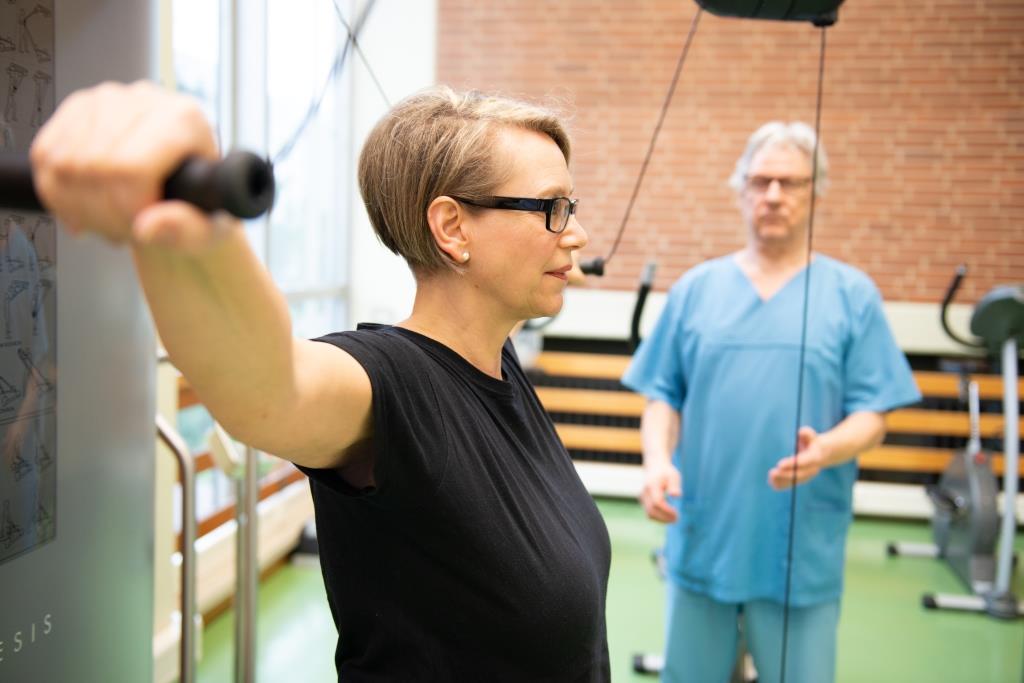
Physical training, nutritional medicine and psychological support can reduce adverse effects after cancer treatment and improve quality of life. To date, however, there is no systematic care structure after a rehabilitation stay or follow-up treatment to provide long-term care for cancer patients. This problem is being addressed by a project of the Institute of Sports Medicine under the direction of Prof. Dr. Uwe Tegtbur. The aim is to implement supplementary care structures in order to close the care gap in aftercare across the board. The solution: cross-sector, telemonitoring-supported long-term aftercare. The aim is to measure certain health values of patients remotely and transmit them digitally to the practitioner and check them. To make this work, people are given portable measuring devices or apps, for example, where they enter the values they have measured themselves. The project aims to record the post-inpatient care quality of MHH patients and develop cross-sector aftercare pathways. "One of the key milestones is a contract for the MHH for admission to provide services so that cross-sector, telemonitoring-supported long-term follow-up care for cancer patients can be financed as standard care," says Tegtbur.
Funding amount 48,500 euros
Tumor markers from urine to improve the diagnosis of sarcomas
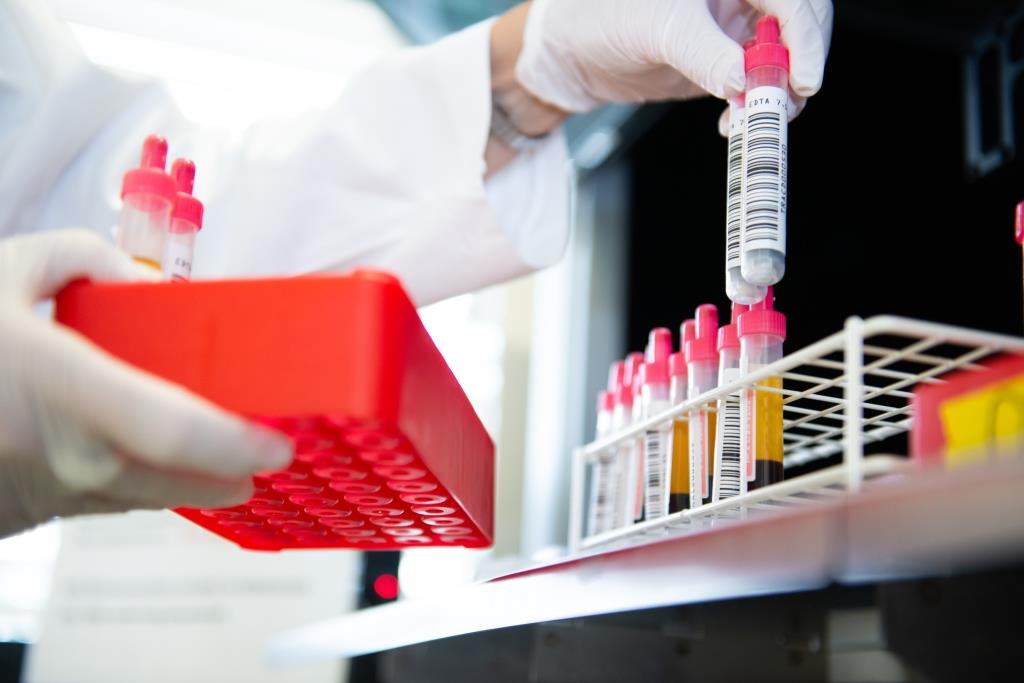
Tumor markers are proteins, peptides or other biological substances in the blood, tissue or body fluids that can occur in elevated concentrations in tumor diseases. They are important aids when it comes to assessing the progress and success of cancer therapy or diagnosing the relapse of a tumor. Special tumor markers for the diagnosis of sarcomas do not yet exist. In the usual routine, the diagnosis of a sarcoma is confirmed by taking a tissue sample and subsequent histological examination. A working group from the Clinical Department of Trauma Surgery has now been able to develop a non-invasive biomarker model that can distinguish whether a sarcoma is present or not. For this purpose, urine samples obtained pre-therapeutically from patients with histologically confirmed sarcoma were examined in comparison to a healthy control group. "We want to further develop and test the diagnostic biomarker model with the aim of using it in future diagnostics and follow-up checks," explains applicant Dr. Ricarda Stauß, research associate at the MHH Sarcoma Center. Such a predictive biomarker model has enormous potential for patients: earlier diagnosis and early detection of relapse and systemic metastasis could have a significant impact on the mortality rate of these tumor diseases.
Funding amount of 58,000
Blood samples and bile instead of tumor tissue
Comprehensive genetic analysis such as next-generation sequencing (NGS) is now making a significant contribution to enabling targeted therapies in the treatment of gastrointestinal (GI) tumors. Until now, tissue samples have primarily been used for these analyses. A significant, but currently less established option is the analysis of cell-free tumor DNA from so-called "liquid biopsies". These are non-solid, biological tissues such as blood. In their project, the Departments of Gastroenterology, Hepatology, Infectious Diseases and Endocrinology and the Institutes of Pathology and Human Genetics want to demonstrate the added value of different liquid biopsies from bile in patients who are highly suspected of having a tumor. The advantages of liquid biopsies in diagnostics and therapy: the analysis not only allows the tumor to be "diagnosed", but also enables a more comprehensive molecular analysis of the tumors. "This methodology and the resulting data not only have the potential to improve the care of those affected, but are also relevant for future research projects, for example with regard to early detection and the identification of resistance," says applicant and MHH gastroenterologist Prof. Dr. Arndt Vogel. The problem: so far, the added value of cell-free DNA diagnostics from bile for therapeutic decisions, especially in palliative therapy situations, has not yet been convincingly demonstrated, in contrast to numerous studies that have already shown the diagnostic significance of liquid biopsy from blood.
Funding amount 57,150
Tracking down risk variants for virus-related cancers
When viruses invade host cells, they are confronted with numerous defense and control mechanisms, many of which are genetically controlled. If these genetic guardians are damaged or not sufficiently efficient, the cells continue to grow unchecked and cancer can develop. The most common viral causes of cancer include human papillomaviruses (HPV), the Epstein-Bar virus (EBV) and hepatitis viruses (HBV/HCV). A research team at the Clinical Department of Gynecology and Obstetrics is currently investigating the specific effects of risk variants on HPV-related dysplasia and carcinoma of the cervix. Genome-wide association studies have identified the first genetic risk factors in recent years. "We assume that there are further, previously unknown genomic factors that have either a general or virus-specific effect on the risk of virus-related cancers," says applicant Dr. Dhanya Ramachandran from the Clinical Department of Gynecology and Obstetrics. "Our goal is to identify a number of previously hidden risk variants through cross-cancer genome-wide analyses of large case-control cohorts and to test the respective contribution of the risk genotype to infection incidence and tumorigenesis."