Ronja Thake
Consultant to the Managing Director Nursing

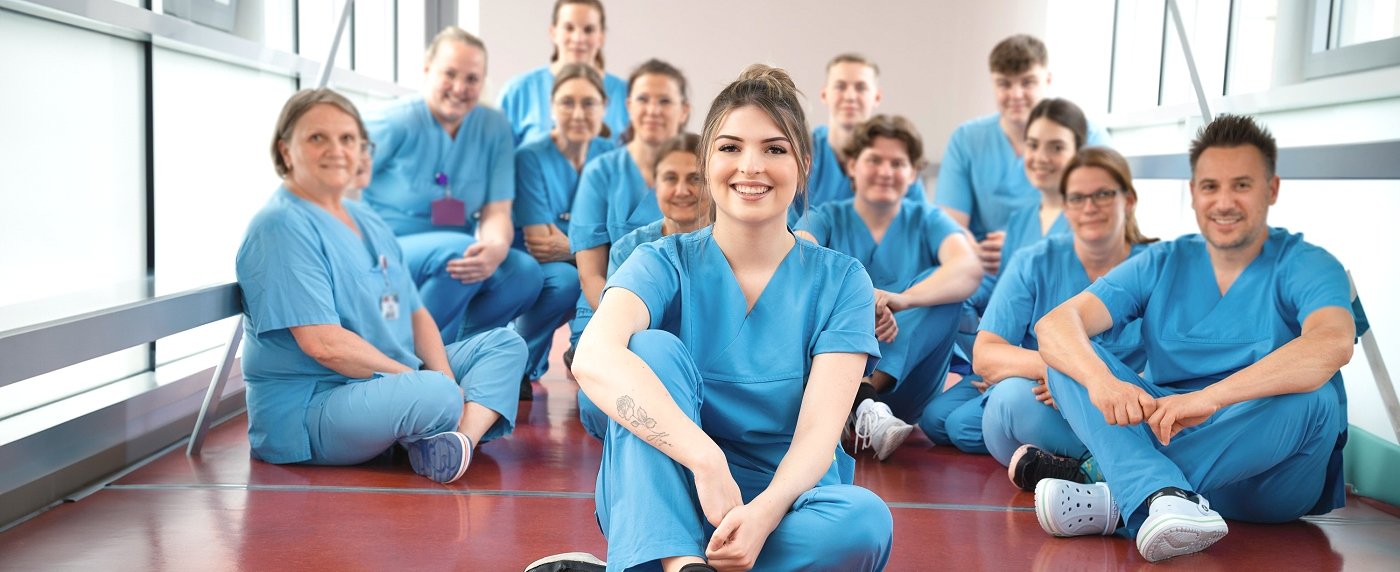



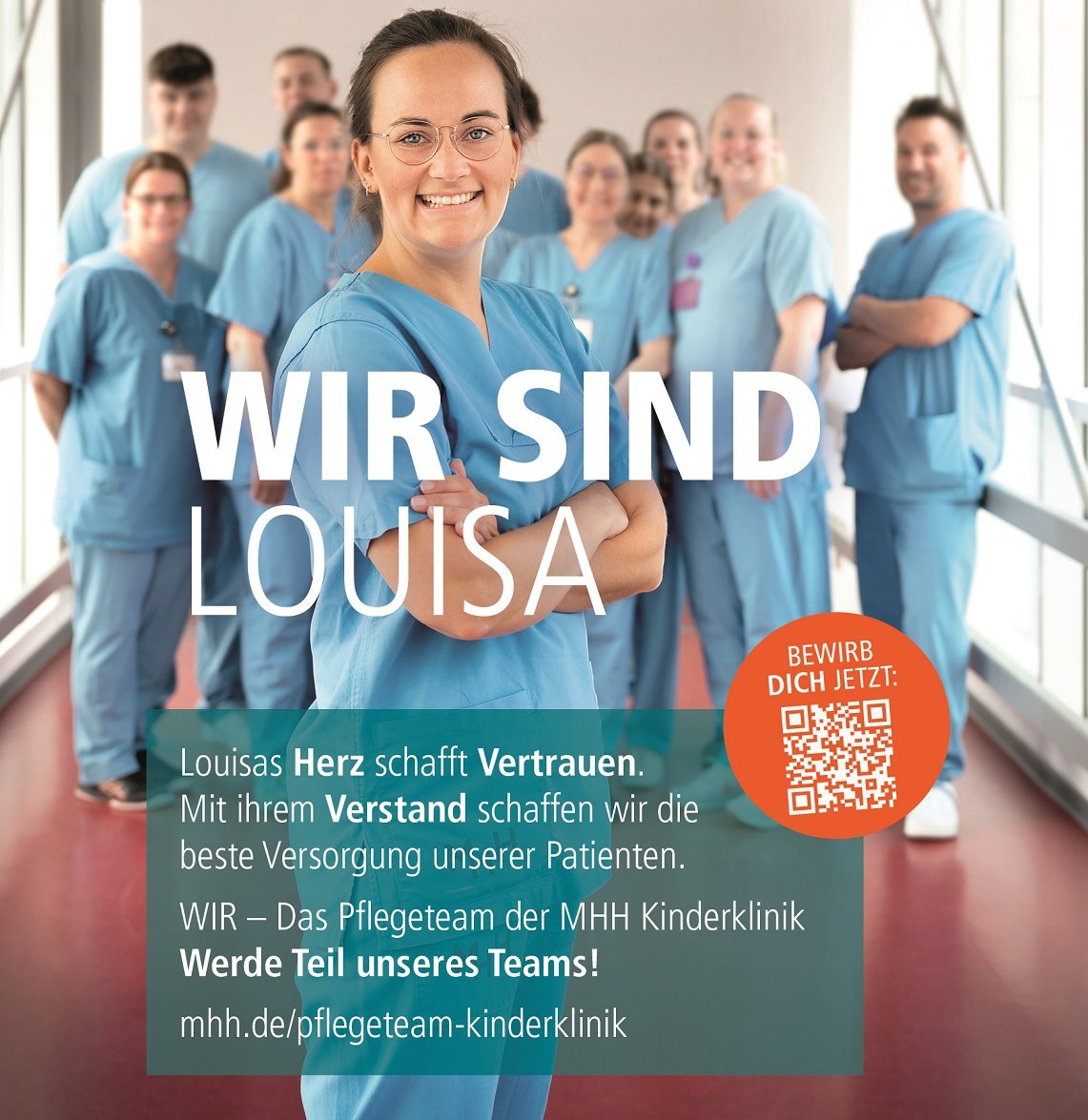
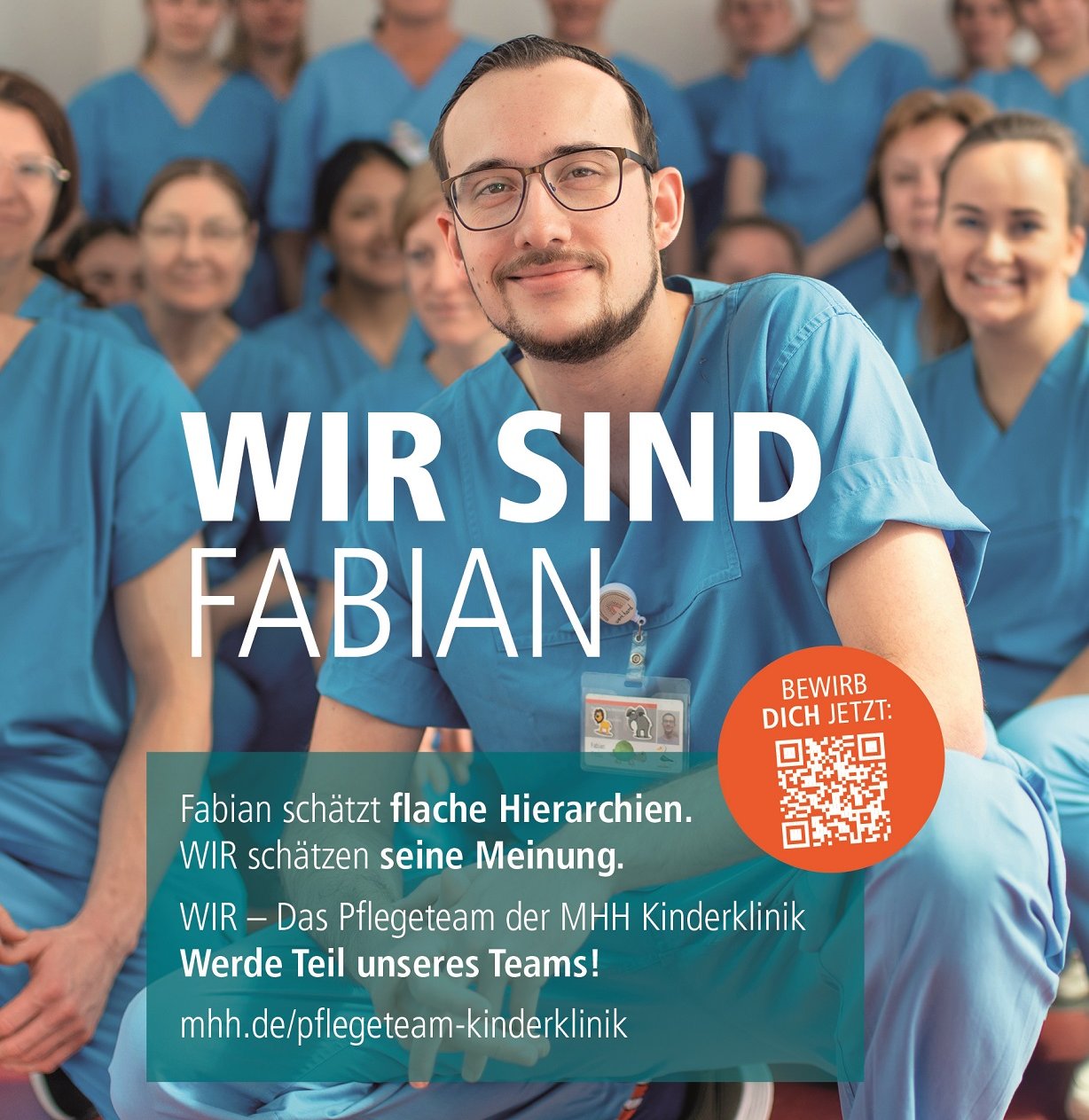
►We are proud of our teammates ►We trust in our teammates ► WE value the opinion of our teammates WE create the best care for our young patients with our teammates WE want you in our team! |
Ward 61a focuses on pediatric gastroenterology.
Children and adolescents with all diseases of the stomach, intestines, pancreas and liver as well as before and after a liver transplant or a combined liver and kidney transplant are treated here.
The pediatric gastroenterology department at the MHH is one of the largest centers for these diseases in Europe.
The special features of nursing care for these patients are, for example
Frequently used diagnostic and therapeutic procedures in addition to complex liver transplantation are
Ward 61b focuses on pediatric nephrology, neuropaediatrics and metabolic diseases.
Children and adolescents with the following organ disorders are treated here:
The special features of nursing care for these patients are, for example
Frequently used diagnostic and therapeutic procedures are
Our task is the Nursing and monitoring of patients:
We instruct patients and their parents in special Nursing for home care.
The focus of our nursing work is the monitoring, implementation and Nursing of patients with oncological and hematological diseases as well as care before or after a bone marrow or stem cell transplant.
This includes the early recognition and management of emergency situations, as well as the extensive use of infusion, transfusion and pain therapies.
When caring for and nursing patients with tumors, we are guided by our concept for oncological care at the MHH
More stable premature babies and newborns (e.g. with metabolic disorders, immunodeficiencies, sepsis, etc.) are cared for on ward 65.
Depending on the child's state of health, the continuation of bonding and guidance in caring for your child is one of the fundamental focal points of our work.
Our young patients are on our ward for a few days, but sometimes for several weeks or months.
The nursing focus is on the pre- and post-operative care of the entire spectrum of pediatric surgery and premature and neonatal surgery.
In order to keep the inpatient stay as short as possible and to give you security in this stressful situation, it is an important objective for us to support you in the special Nursing of your child.
Our task is the pre- and post-operative Nursing and monitoring of patients after operations in:
This includes aseptic dressing changes and handling various supply and drainage lines, e.g. thoracic / wound drains, splints, various catheters, VAC pumps, central venous access including parenteral nutrition.
Our focus is on the intensive care and treatment of newborns, infants, small children, schoolchildren and adolescents with:
Adults with congenital heart defects following heart surgery are also cared for on our ward.
In addition to the usual intensive medical monitoring and ventilation, special organ replacement procedures are used, e.g. dialysis, ECMO (extracorporeal membrane oxygenation).
In order to mobilize our patients as quickly as possible, we work closely with the early rehabilitation team.
The nursing focus is on the pre- and post-operative care of patients of all age groups with congenital heart defects.
In order to keep the inpatient stay as short as possible and to give you peace of mind in this stressful situation, it is an important objective for us to support you in the special Nursing of your child.
Range of care on ward 68b
Our task is the Nursing and monitoring of:
1. patients with congenital and acquired heart defects
2. adult patients with congenital heart defects
3. patients with neurosurgical diseases before and after surgical interventions
4. patients after dental / maxillofacial surgery
5. and patients following procedures in the Department of Plastic, Aesthetic, Hand and Reconstructive Surgery.
This includes, among other things, aseptic dressing changes and the handling of various supply and drainage lines, e.g. thoracic / wound drains, central venous access including parenteral nutrition, VAC pump.
Ward 69 cares for premature babies from the 24th week of pregnancy, sick newborns (e.g. with metabolic diseases, immunodeficiencies, sepsis, etc.) and children up to approx. 2 years of age following surgery and/or requiring intensive medical treatment.
The ward has an intensive care and an intermediate care (IMC) area. This enables us to care for both critically ill and more stable patients who require monitoring.
In addition to the care of premature babies, our range of care also includes all prenatally diagnosed conditions (diagnosed before birth) that require immediate emergency care of the newborn after birth, e.g. congenital malformations (e.g. critical heart defects, diaphragmatic hernias, meningomyeloceles, gastroschisis, maternal diseases with fetal risk).
Our young patients are on our ward for a few days, but sometimes for several weeks or months.
... with individual onboarding and an induction period in the tandem system.
... through a flexible working relationship that enables part-time and full-time work as well as deployment in our care strengthening team, where you will work according to your preferred work schedule.
... with a permanent employment contract in a secure working environment in the public sector.
The MHH has been certified as a family-friendly university since 2005. It has committed itself to maintaining and continuously expanding the high standard of family-supporting measures. Our offers in detail:
You can find even more information here at our family service.
... with both personal and professional opportunities for further education and training.
► More information about further education and training opportunities for Nursing
► Nursing throughout Europe: getting to know the nursing profession anew with the Erasmus+ program
► Further MHH advisory services for employees
... by 30 days of vacation and up to 9 days of alternating shift leave.
... with company bike leasing, health and sports programs, company daycare center, company pension scheme, etc.